
Why does your skin suddenly start breaking out or developing pigmentation just as the weather improves?
If you notice more congestion, uneven tone, or stubborn patches of melasma every spring, you are not imagining it. Hormones and your skin are closely connected, and seasonal light changes can amplify underlying hormonal skin changes in ways that surprise many women.
At Youtopia Medical , we regularly see adult acne in women, menopause skin changes, teenage breakouts, and pigmentation flare ups worsen as spring arrives. Increased daylight, shifting cortisol patterns, and hormonal fluctuations all influence sebum production, melanocyte stimulation, and skin barrier function. The result is often a frustrating mix of oiliness, inflammation, uneven tone, and sensitivity.
The good news is that hormonal acne and pigmentation can be treated safely and effectively with the right medical guidance. Treatments such as Obagi Blue Peel Radiance combined with prescription strength skincare form part of our structured, consultation led approach at our Cannock clinic.
Let us explore why spring acts as a trigger and what you can realistically do about it.
Why Do Hormones Affect Your Skin More in Spring?
Seasonal Light Exposure and Melanin Activation
Spring brings longer daylight hours and increased ultraviolet exposure. Even on cooler days, UV levels rise significantly compared to winter. This stimulates melanocyte activity, increasing melanin production and worsening:
- Melasma
- Post inflammatory hyperpigmentation
- Uneven skin tone
- Pigmentation after acne
Hormonal fluctuations can make melanocytes more reactive. Oestrogen influences melanocyte stimulation, which explains why melasma is more common in women and often worsens with light exposure.
If you are already managing pigmentation, this is when it tends to flare.
You can explore our advanced pigmentation treatment options to understand how we approach this safely and progressively.
Oestrogen, Progesterone and Sebum Production
Hormonal acne is not confined to teenagers. Fluctuations in oestrogen and progesterone directly affect sebum regulation. When androgens increase relative to oestrogen, sebaceous glands produce more oil.
More oil means:
- Congested pores
- Inflammatory lesions
- Jawline breakouts
- Adult female acne
Spring can disrupt circadian rhythms and stress levels, which in turn influence hormonal balance and inflammatory pathways. This is often when cyclical breakouts become more visible.
If you are struggling with persistent adult acne, our hormonal acne treatment in Cannock page explains how we address underlying causes rather than simply treating surface symptoms.
Cortisol, Stress and Inflammatory Skin Conditions
Seasonal transitions affect cortisol patterns. Increased stress, lighter evenings, and lifestyle changes can increase inflammatory markers.
Inflammation contributes to:
- Acne flares
- Rosacea
- Skin sensitivity
- Impaired barrier repair
When transepidermal water loss increases and the barrier weakens, skin becomes reactive. Overuse of exfoliating products can then worsen the problem.
Hormonal Breakouts: Not Just a Teenage Problem
Teenage Acne and Puberty Hormones
During puberty, androgen activity increases oil gland stimulation. This leads to excess sebum, bacterial proliferation, and textural irregularities.
Teenage acne is primarily hormonally driven. However, poor barrier function and aggressive skincare can worsen inflammation and increase the risk of post acne pigmentation.
Structured treatment matters. Our medical-grade chemical peels are often used carefully in younger patients to support cellular turnover and reduce congestion safely.
Adult Female Acne in Your 30s and 40s
Adult acne in women often presents along the lower face. It is cyclical and linked to hormonal imbalance, stress, and sometimes perimenopause.
Unlike teenage acne, adult female breakouts often coexist with:
- Early collagen decline
- Sensitivity
- Pigmentation flare ups
- Slower cellular turnover
This combination requires a balanced strategy that regulates oil without compromising the skin barrier.
Menopause and Perimenopause Skin Changes
Does menopause cause acne and pigmentation? In many cases, yes.
Declining oestrogen leads to:
- Collagen degradation
- Increased dryness
- Reduced elasticity
- Slower wound healing
- Heightened pigmentation risk
At the same time, relative androgen dominance can increase sebum production. This explains why some women experience both dryness and breakouts simultaneously.
If this sounds familiar, our approach to menopause related skin changes focuses on strengthening the barrier, supporting collagen, and managing pigment safely.
Why Pigmentation Gets Worse in Spring
Melasma and Hormonal Hyperpigmentation
Melasma is strongly influenced by oestrogen. With increased UV exposure in spring, melanocyte stimulation intensifies. Even minimal sun exposure can reactivate dormant pigment.
Hormones and your skin are particularly connected during perimenopause, pregnancy history, and contraceptive use.
Melasma treatment requires patience and structured intervention. Random over the counter acids are rarely enough.
Post Acne Marks and Uneven Tone
Post inflammatory hyperpigmentation develops after inflammatory acne lesions. When UV exposure increases, these marks darken.
This is why treating acne alone is not sufficient. Pigmentation management must be part of the plan.
Our advanced pigmentation treatment combines medical skincare and controlled procedures to prevent recurrence.
Teenage vs Adult Pigmentation Differences
Teenage pigmentation is often superficial and linked to inflammatory acne. Adult pigmentation is frequently deeper and hormonally driven.
Both require careful assessment.
How to Treat Hormonal Breakouts and Pigmentation Safely
Medical Grade Skincare for Hormonal Skin
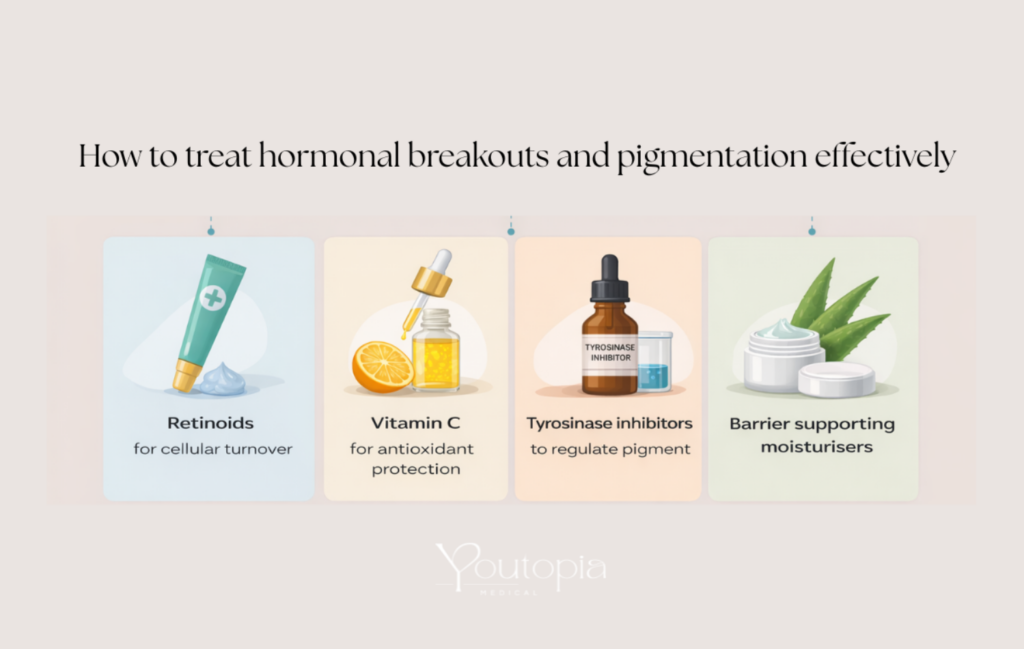
Effective treatment often begins with prescription strength skincare. Ingredients may include:
- Tretinoin to accelerate cellular turnover
- Vitamin C for antioxidant protection
- Tyrosinase inhibitors to regulate pigment
- Barrier supporting moisturisers
Daily SPF is essential when treating acne and pigmentation. Many active ingredients increase photosensitivity, and without consistent sun protection pigmentation can worsen and treatment results can be compromised.
We frequently use systems from Obagi Medical as part of a structured protocol tailored to the individual.
Professional guidance prevents over stripping and supports consistent improvement.
Obagi Blue Peel Radiance: How It Works
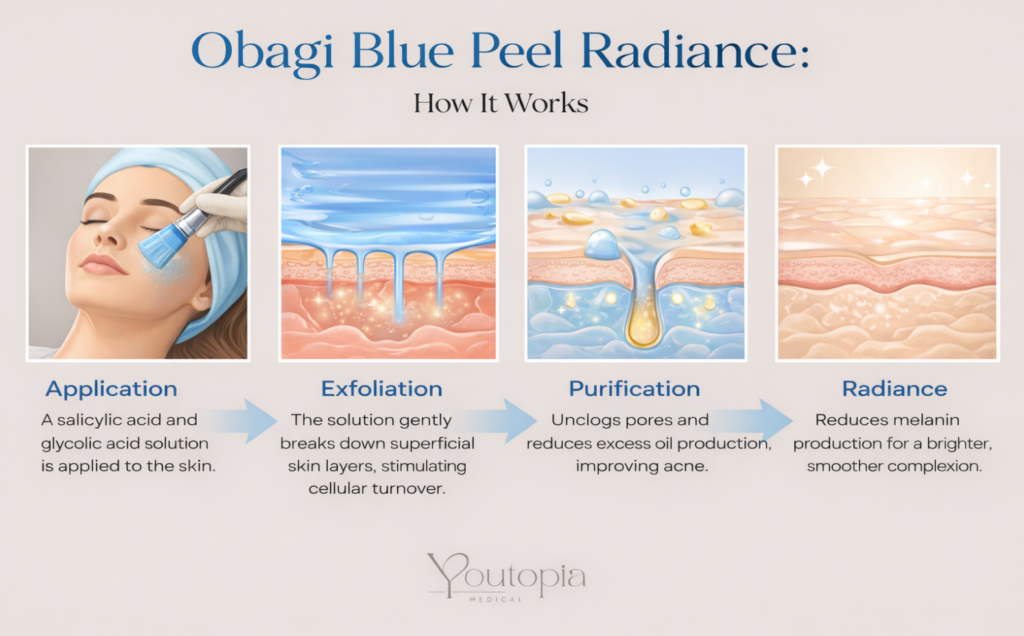
Obagi Blue Peel Radiance is a superficial salicylic acid based peel designed to stimulate controlled exfoliation. It supports:
- Cellular turnover
- Oil regulation
- Reduction in acne lesions
- Improvement in tone and texture
- Brightening of superficial pigmentation
Because it is superficial, downtime is minimal. Mild flaking may occur for a few days.
When used within a broader treatment plan, it helps reset congested, hormonally reactive skin.
When to Combine Peels with Prescription Skincare
Peels are most effective when integrated into a wider protocol. Preconditioning the skin with retinoids and pigment regulators improves outcomes.
This is why we always begin with a consultation.
To start, you can book a skin consultation at Youtopia Medical in Cannock.
Treating Menopausal Skin Without Over-Stripping
Menopause skin requires caution. Aggressive resurfacing can worsen dryness and barrier dysfunction.
Our focus is on:
- Supporting collagen
- Strengthening the barrier
- Gradual pigment reduction
- Long term maintenance
When Should You Seek Professional Advice?
Consider professional assessment if:
- Acne persists beyond teenage years
- Pigmentation does not respond to high street products
- Menopause skin changes are worsening
- Spring breakouts return every year
At Youtopia Medical , we take a consultation-led approach. Every plan is tailored after reviewing hormone history, lifestyle factors, and skin condition.
The Consultation-Led Approach at Youtopia Medical
Located at Keys Business Village, Cannock, we provide structured treatment plans that evolve with the seasons.
We assess:
- Hormonal history
- Barrier function
- Pigment depth
- Inflammatory triggers
From there, we design a plan combining skincare, peels, and progressive treatment.
If you are ready to address hormones and your skin properly, book your consultation today.
FAQs
Does spring weather cause acne?
Spring itself does not cause acne, but increased UV exposure, cortisol shifts, and hormonal fluctuations can trigger breakouts.
Can hormones cause pigmentation?
Yes. Oestrogen influences melanocyte activity, increasing the risk of melasma and post inflammatory hyperpigmentation.
Why is my menopause skin breaking out?
Declining oestrogen combined with relative androgen dominance can increase oil production while collagen decreases.
Is Obagi Blue Peel Radiance good for hormonal acne?
It can help regulate oil, improve texture, and reduce superficial pigmentation when used as part of a medical plan.
How do I treat hormonal pigmentation safely?
With prescription strength skincare, sun protection, and controlled treatments guided by a medical professional.