
Have you ever wondered why some aesthetic results look beautifully natural and long-lasting, while others feel short-lived or incomplete?
The answer usually lies in how treatments are combined.
At Youtopia Medical Aesthetics, we rarely rely on a single modality. Ageing does not happen in one layer, so effective rejuvenation cannot either. Volume loss, collagen decline, textural changes, and skin laxity all develop together. Treating just one element often delivers partial results.
This is where the collaborative approach of fillers and regenerative treatments becomes essential.
By combining dermal fillers with regenerative modalities such as Secret RF, microneedling, and polynucleotides, we address both structure and skin quality. This multi-modality strategy, also known as treatment stacking aesthetics, allows us to restore volume while stimulating collagen, improving texture, and strengthening dermal integrity.
In this guide, I will walk you through how fillers and regenerative treatments work together, why sequencing matters, who this approach suits best, and what realistic results actually look like.
What Is a Collaborative, Multi-Modality Aesthetic Approach?
Defining Multi-Modality in Aesthetics
Multi-modality aesthetic treatments simply mean combining different technologies and injectables within a planned treatment pathway. Instead of asking, “Which treatment do I need?”, we ask:
What does your skin need first, second, and over time?
This approach recognises that facial ageing involves:
- Volume depletion
- Collagen and elastin breakdown
- Changes in dermal architecture
- Reduced tissue support
- Surface texture deterioration
Each concern requires a different solution.
Why Synergy Matters
Dermal fillers restore lost volume and soft-tissue support. Regenerative treatments improve tissue quality through collagen stimulation and biostimulation therapy.
Together, they deliver additive benefits.
Fillers provide structure. Regenerative therapies improve the canvas.
This synergy underpins regenerative skin rejuvenation + injectables, allowing results to look smoother, fresher, and more coherent.
Injectables Explained: Dermal Fillers & What They Do
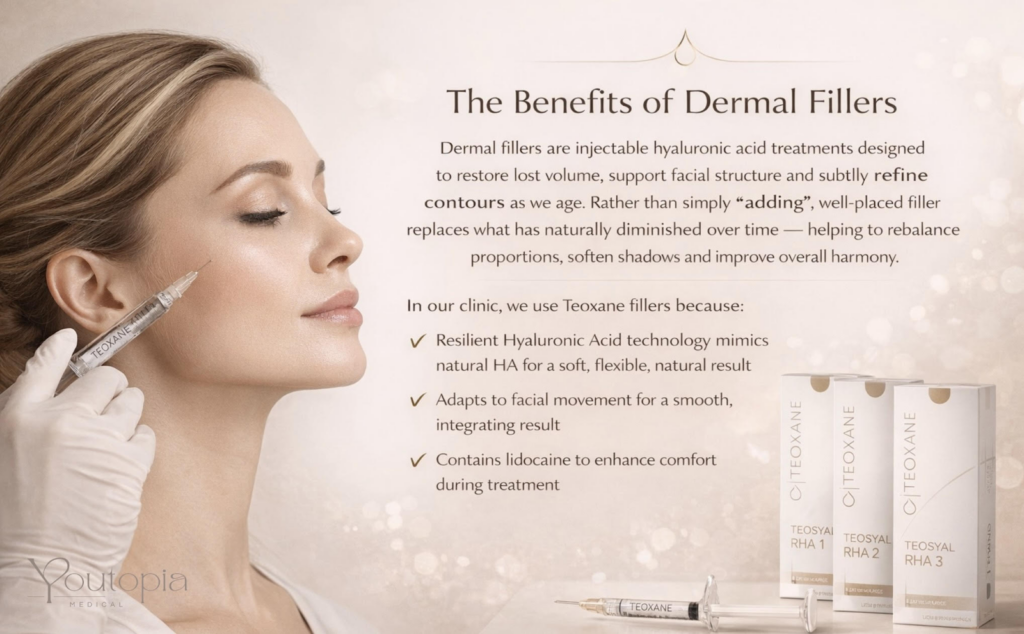
Dermal Fillers Explained: How Hyaluronic Acid Restores Natural Facial Structure
Dermal fillers are injectable hyaluronic acid treatments designed to restore lost volume, support facial structure and subtly refine contours as we age.
They do not simply “add” volume.
Well-placed filler replaces what has naturally diminished over time. It rebalances proportions, softens shadows and restores harmony without changing your identity.
Why Volume Loss Happens
Facial ageing is not uniform.
- The midface gradually flattens
- The temples begin to hollow
- The jawline loses definition
- Structural support weakens
Strategic placement of hyaluronic acid restores support where it is biologically required, not where trends dictate.
Why We Use Teoxane Dermal Fillers
In clinic, we use Teoxane dermal fillers, specifically the RHA range.
Their advanced, resilient hyaluronic acid technology closely mimics the skin’s natural HA. This allows the product to move dynamically with facial expression rather than sitting rigidly within tissue.
The range includes products formulated for different anatomical layers:
- Deeper placement for structural support
- Mid-layer placement for contour and volume
- Superficial placement for line softening and refinement
The objective is always balance. Never excess.
When dermal filler is placed with anatomical precision and restraint, the result looks like restoration, not intervention.
Realistic Expectations and Results
What Patients Notice First
Results do not always reveal themselves instantly. That is intentional.
With regenerative treatments such as Secret RF, improvements in:
- Skin texture
- Tone
- Dermal integrity
- Overall skin quality
Are often noticed before visible tightening.
Skin may appear smoother and more refined within weeks. However, collagen stimulation is a biological process. It unfolds gradually as fibroblasts respond and new collagen fibres form.
This progression takes weeks to months. The outcome looks believable rather than abrupt.
How Dermal Filler Differs
Dermal filler provides immediate structural change.
Volume restoration and contour refinement are visible at the end of the appointment.
However, final results improve over the following weeks as:
- The product integrates with surrounding tissue
- Minor swelling resolves
- The filler settles into position
The face adapts gradually. This staged progression protects natural outcomes.
Downtime and Aftercare
Downtime varies depending on the treatment performed and your individual healing response.
After Secret RF
- Temporary redness
- Mild swelling
- Skin sensitivity for several days
- Small pinpoint marks initially
These effects resolve as the skin initiates repair.
After Dermal Filler
- Short-term swelling
- Possible bruising, particularly in vascular areas
- Mild tenderness
Most swelling settles within several days, although subtle tissue integration continues beyond that.
Recovery should never be an afterthought.
Clear aftercare guidance, activity modification and skincare adjustments protect both your results and your skin barrier. Treatment timing around key events should always be discussed in advance.
Aesthetic treatment should feel planned, informed and medically led.
How Long Do Dermal Fillers Last?
Hyaluronic acid dermal fillers typically last 9 to 18 months, depending on:
- Treatment area
- Product used
- Metabolic rate
- Lifestyle factors
Higher movement areas, such as the lips, tend to metabolise more quickly. Structurally supported areas often last longer.
Once optimal balance is achieved, maintenance is usually less frequent than patients expect. Small, considered refinements preserve structure over time without escalation.
Regenerative treatments continue to remodel collagen beneath the surface for up to six months, supporting long-term skin quality.
Longevity is influenced by:
- Skin biology
- Sun exposure
- Inflammation levels
- Smoking
- General health
Maintenance should always be personalised, not protocol driven.
Risks, Limitations and Common Misconceptions
More Is Not Better
In aesthetic medicine, restraint separates refinement from regret.
Layering multiple interventions without clinical indication can:
- Distort proportions
- Accelerate tissue stress
- Compromise facial harmony
Strategic planning consistently outperforms excess.
Collagen Stimulation Is Not Surgical Lift
Radiofrequency microneedling and other collagen-stimulating treatments improve:
- Skin density
- Elasticity
- Texture
They do not replicate surgical lifting. They are designed to strengthen tissue quality, not replace surgery.
Understanding what a treatment can and cannot achieve protects expectations.
Dermal Filler Is Often Misunderstood
Dermal filler should restore lost structural support.
It should not:
- Mask significant laxity
- Replace surgical correction
- Chase unrealistic ideals
When used appropriately, it enhances rather than alters.
Treatment Stacking and Clinical Timing
Combining treatments can be highly effective when medically planned.
However, incorrect sequencing, inadequate spacing or poor patient selection can increase the risk of:
- Post-inflammatory pigmentation
- Prolonged inflammation
- Tissue stress
- Over-correction
Energy-based devices, injectables and resurfacing treatments each influence healing pathways differently.
Treatment stacking must be anatomy-led and clinically reasoned. It should never be trend driven.
Regenerative Treatments: Secret RF and Beyond
Secret RF: Fractional Radiofrequency Explained
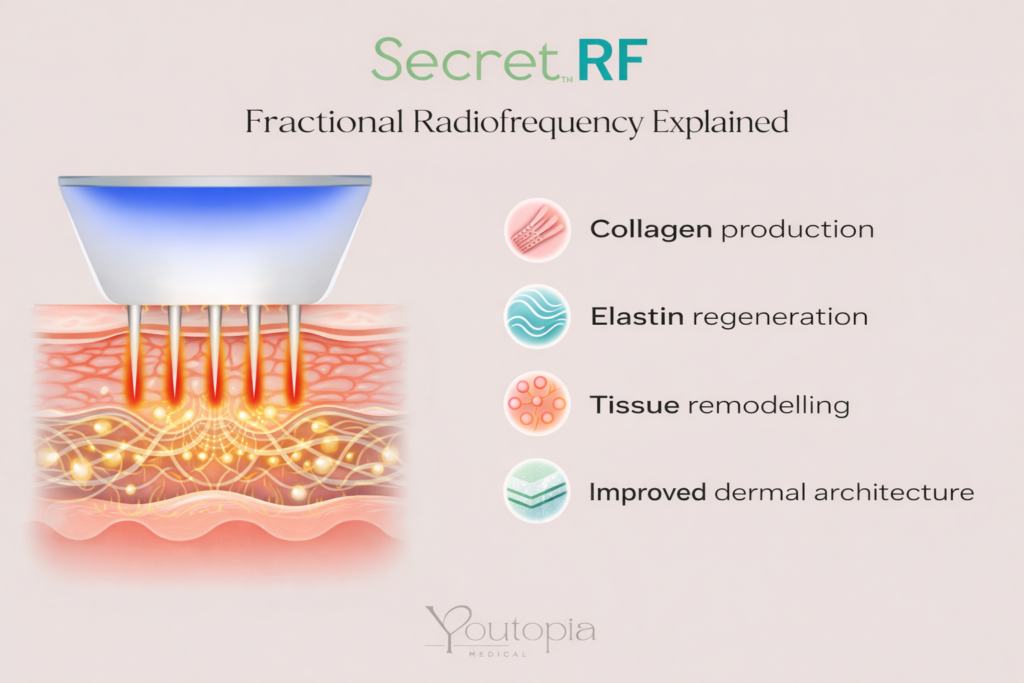
Secret RF is a fractional RF microneedling technology that delivers controlled thermal energy into precise dermal depths.
This creates fractional micro-thermal zones that trigger a controlled injury cascade, stimulating:
- Collagen production
- Elastin regeneration
- Tissue remodelling
- Improved dermal architecture
It is particularly effective for skin laxity, acne scarring, enlarged pores, and uneven texture.
This forms the backbone of our fractional RF microneedling explained protocols.
Other Regenerative Modalities
Depending on your skin biology, we may also integrate:
- Polynucleotides for tissue repair and hydration
- Medical microneedling for surface renewal
Each modality enhances tissue quality in different ways. Combined, they create synergistic aesthetic protocols that elevate filler outcomes.
These therapies sit within our wider regenerative modalities for skin quality pathways.
How Fillers & Regenerative Treatments Work Together
Sequence Matters: Treatment Stacking Protocols
Multi-modality treatment stacking is not random.
Typically, regenerative treatments come first to improve tissue health. Fillers follow once the skin is better conditioned.
This sequencing allows fillers to integrate more naturally and may improve longevity.
There is no universal formula. Aesthetic treatment sequencing depends on anatomy, lifestyle, and biological response.
Biological Synergy: Volume + Structural Support + Quality
Secret RF prepares tissue by strengthening the dermal matrix. Fillers then provide hyaluronic acid volumisation and soft-tissue support.
Together, they address:
- Skin quality vs volume correction
- Surface texture and deep structure
- Immediate refinement and long-term regeneration
This is the foundation of combined Secret RF and fillers benefits.
Clinical Example Scenarios
Moderate ageing with texture concerns
Secret RF first, followed by targeted fillers.
Volume loss with acne scarring
Regenerative therapy to remodel scar tissue, then fillers for contour restoration.
Early ageing prevention
Low-level regenerative therapy combined with conservative injectables to support predictable longevity.
Suitability & Patient Selection
Who Is Ideal for a Collaborative Approach?
This approach suits patients experiencing:
- Skin laxity
- Volume loss
- Textural irregularities
- Early to moderate ageing
It also benefits those seeking the best treatment plan for ageing skin laxity and volume loss.
When to Proceed with Caution
We assess carefully in cases of:
- Active inflammatory skin conditions
- Recent scar tissue
- Pregnancy
- Autoimmune disorders
Predictable outcomes and patient selection always come first.
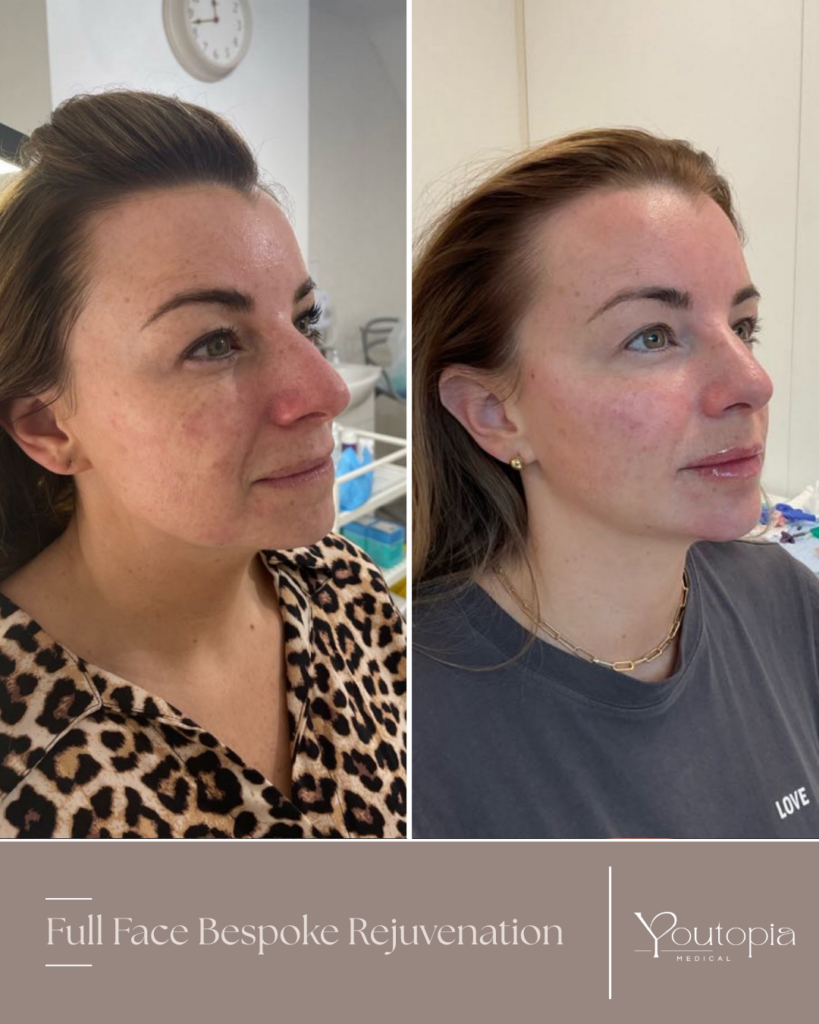
Realistic Expectations & Results
What Patients Notice First
Texture often improves before volume changes become obvious. Collagen stimulation takes weeks to months.
This gradual progression supports natural results.
Expected Longevity
Fillers typically last 9 to 18 months. Regenerative effects continue to evolve for up to six months.
Maintenance plans depend on skin biology and lifestyle.
Risks, Limitations & Misconceptions
Common Misconceptions
More treatments do not always mean better results.
Collagen stimulation does not guarantee dramatic lifting.
Risks of Overlapping Modalities
Incorrect timing can increase pigment changes or over-correction. This is why medically led planning matters.
Safety Best Practices
At Youtopia Medical, treatments are consultation-led, anatomy-guided, and tailored. This protects outcomes and skin integrity.
Summary & Next Steps
A collaborative approach fillers and regenerative treatments strategy addresses ageing in all its layers.
Fillers restore structure. Regenerative therapies improve tissue quality. Together, they deliver balanced, natural results.
If you are exploring a multi-modality approach to facial ageing, the next step is to explore a tailored treatment plan through a comprehensive consultation. You can also review realistic outcomes from multi-modality protocols during your visit.
Frequently Asked Questions
Why combine Secret RF with dermal fillers?
Secret RF improves skin quality and collagen production, allowing fillers to integrate more naturally and last longer.
Is treatment stacking safe?
Yes, when performed by medically trained practitioners using appropriate sequencing and protocols.
How long do combined results last?
Fillers last 9 to 18 months. Regenerative improvements continue developing for several months.
Can regenerative treatments replace fillers?
No. Regenerative therapies improve skin quality but do not replace lost volume.
Who is not suitable for this approach?
Patients who are pregnant, have active skin infections, or certain autoimmune conditions may need alternative options.