
Have you noticed changes in your face or skin after starting GLP-1 weight loss medication?
Many patients experiencing significant weight loss from medications such as Ozempic, Wegovy, or Mounjaro begin to notice unexpected skin changes. While these treatments are highly effective for improving metabolic health and supporting weight loss goals, rapid fat reduction can sometimes lead to visible changes in skin quality and facial structure.
At Youtopia Medical Aesthetics, we increasingly see patients who have achieved impressive weight loss results but feel concerned about skin laxity after rapid weight loss, facial hollowing, or reduced definition in the lower face. Understanding why these changes occur is the first step in protecting and supporting your skin throughout your weight loss journey.
Medical weight loss can be life-changing. However, maintaining skin elasticity after weight loss requires a structured approach that supports collagen production, skin integrity, and long-term skin health.
What Are GLP-1 Medications?
GLP-1 medications have transformed medical weight management. Originally developed for type 2 diabetes, they are now widely used to support sustainable weight loss.
Common examples include:
- Ozempic
- Wegovy
- Mounjaro
These medications mimic a natural hormone called glucagon-like peptide-1, which regulates appetite and digestion.
They work by:
- Reducing hunger signals
- Slowing gastric emptying
- Improving blood sugar control
- Encouraging reduced calorie intake
For many patients, this leads to significant weight loss over several months. While beneficial for overall health, rapid changes in body composition can affect the skin.
Why Does Rapid Weight Loss Affect the Skin?
A common concern is rapid weight loss skin laxity.
When fat is lost quickly, the skin does not always adapt at the same rate. Several factors contribute to this.
Loss of Structural Support
Fat provides volume and support beneath the skin. As it reduces, volume loss in the face can leave the skin appearing looser or less defined.
This is often most noticeable in:
- The jawline
- The cheeks
- Under the eyes
- The neck
Collagen and Elastin Changes
Skin elasticity depends on collagen and elastin fibres within the dermis.
With age, natural collagen loss reduces the skin’s ability to rebound. When combined with rapid weight loss, the skin may not tighten as effectively.
This is why patients in their 30s and beyond are more likely to notice skin laxity after weight loss.
Age-Related Skin Changes
Over time, the skin naturally experiences:
- Reduced collagen production
- Thinner dermal layers
- Slower cellular turnover
- Decreased elasticity
When rapid fat loss occurs alongside these changes, laxity becomes more visible.
Stress and Inflammation
Significant weight loss can also place stress on the body. Metabolic changes and inflammation may affect the skin’s ability to repair and regenerate efficiently.
Supporting skin health during this period is essential.
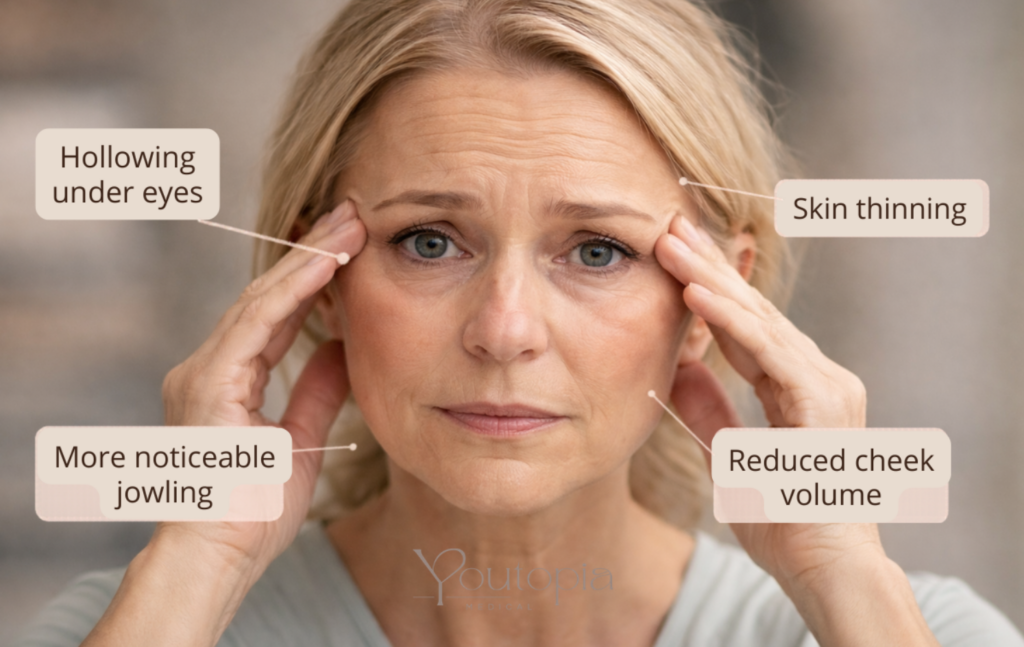
What Is “Ozempic Face”?
The term “Ozempic face” has become widely used, but it is often misunderstood.
It does not mean the medication causes ageing. Instead, it refers to the effects of rapid fat loss, particularly in the face.
Common changes include:
- Hollowing beneath the eyes
- Reduced cheek volume
- Increased jowling
- Looser skin in the lower face
- A thinner skin appearance
These changes occur because facial fat pads shrink as weight decreases. When this happens quickly, the skin may appear less supported.
Importantly, these changes can be managed with the right approach.
Can Skin Laxity Be Prevented?
Some level of skin change is expected, but there are ways to reduce its impact.
At Youtopia Medical Aesthetics, we focus on prevention and regeneration rather than reactive correction.
Slow and Monitored Weight Loss
Gradual weight loss allows the skin more time to adapt. A medically guided approach can help reduce excessive loose skin after Ozempic.
Prioritising Protein Intake
Protein supports collagen production and tissue repair. Maintaining adequate intake helps preserve skin strength and structure.
Hydration and Barrier Support
Hydration is essential for maintaining skin elasticity. Supporting the skin barrier with appropriate skincare reduces dryness and improves resilience.
Collagen Support
Collagen stimulation becomes increasingly important during weight loss. Supporting the body’s natural collagen production helps maintain firmness.
Early Regenerative Treatments
Introducing collagen stimulation treatments early can help maintain skin quality before laxity becomes more noticeable.
Treatment options for facial changes after GLP-1 weight loss
Dermal Fillers for Volume Loss After GLP-1 Weight Loss
While regenerative treatments help improve skin quality, dermal fillers can play an important role in restoring facial volume after GLP-1 weight loss.
Rapid weight loss often leads to reduced facial fat, which can create hollowing in the cheeks, temples, under-eye area, and around the mouth. This loss of structural support can leave the face looking tired, less defined, or prematurely aged.
Dermal fillers can be used to subtly restore this lost volume. The aim is not to add fullness, but to rebuild structure and support, helping the face look balanced and refreshed.
At Youtopia Medical Aesthetics, we take a full-face approach. Volume loss is rarely isolated, so careful placement across the mid-face, cheeks, and lower face helps restore natural contours while avoiding an overfilled appearance.
Treatment is often introduced gradually, particularly for patients still losing weight. Dermal fillers may also be combined with collagen-stimulating treatments to support skin quality and elasticity, creating natural, long-term results following GLP-1 weight loss.
Radiofrequency Microneedling
Treatments such as Secret RF stimulate collagen deep within the skin using controlled microneedling and radiofrequency energy.
This helps to:
- Stimulate new collagen production
- Improve skin firmness
- Support tissue remodelling
- Enhance texture
For patients experiencing facial volume loss after weight loss, this approach strengthens the skin’s underlying support.
Biostimulators
Biostimulators encourage the body to produce its own collagen over time.
They support:
- Skin thickness
- Dermal regeneration
- Long-term structural improvement
This leads to gradual, natural-looking results.
Skin Health Optimisation
Professional skincare remains a key part of any treatment plan.
Medical-grade skincare may include:
- Retinoids for cellular turnover
- Vitamin C for antioxidant protection
- Barrier-supporting moisturisers
- Pigment-regulating ingredients
Together, these support stronger, healthier skin.
Supporting Your Skin Throughout Your Weight Loss Journey
GLP-1 weight loss can deliver powerful health benefits, improved confidence, and long-term wellbeing. However, your skin should be supported throughout the process.
At Youtopia Medical Aesthetics in Cannock, our approach focuses on skin health first. We prioritise prevention, regeneration, and natural results.
Rather than chasing dramatic changes, we focus on strengthening the skin and supporting its ability to repair and rebuild.
Medical weight loss can transform your health. Supporting your skin ensures your results look balanced, healthy, and aligned with how you feel.
Ready to support your skin through your weight loss journey?
Book your personalised consultation at Youtopia Medical Aesthetics and let us create a treatment plan tailored to your skin, your goals, and your timeline.
👉 Book your consultation here:
FAQs
Does Ozempic cause loose skin or “Ozempic face”?
Ozempic and other GLP-1 medications do not directly cause loose skin. What people refer to as “Ozempic face” is typically the result of rapid fat loss, which reduces the structural support beneath the skin and can lead to skin laxity and facial volume loss.
Why does my face look older after weight loss?
After significant weight loss, especially if it happens quickly, the face can appear older due to loss of fat volume, reduced skin support, and existing collagen decline. This can lead to hollowing, softer contours, and more visible lines.
How can I prevent loose skin during weight loss?
Preventing loose skin during weight loss involves a combination of gradual, medically guided weight loss, adequate protein intake, hydration, and early introduction of collagen-stimulating treatments. In some cases, starting regenerative treatments before commencing GLP-1 medications can help provide additional support to facial tissues, strengthening skin quality and resilience as weight loss progresses. Supporting the skin while you lose weight is key.
What are the best treatments for skin laxity after weight loss?
The most effective treatments focus on regeneration rather than simply adding volume. These may include radiofrequency microneedling, biostimulators, exosome therapy, and medical-grade skincare to support collagen production and improve skin firmness.
Can loose skin from weight loss tighten naturally?
Skin can improve over time, but this depends on age, genetics, and how much weight has been lost. In many cases, collagen stimulation treatments help accelerate tightening and improve overall skin quality.
How do I fix facial volume loss after weight loss?
Facial volume loss can be improved through a combination of biostimulators and dermal fillers to help treat volume loss, alongside carefully selected approaches that restore structure in a natural, subtle way. A consultation-led plan is essential for the best outcome.
Is “Ozempic face” permanent or reversible?
In most cases, the appearance associated with “Ozempic face” is not permanent. With the right combination of skin treatments and collagen support, skin quality, firmness, and facial balance can be significantly improved.