
October is often when we start to notice what summer has left behind.
After months of stronger UV exposure, warmer weather, holidays and changes to our usual skincare routines, pigmentation can look more noticeable, skin may feel drier or rougher, and fine lines and uneven texture can become more apparent. At the same time, cooler weather and central heating can begin to affect hydration and the skin barrier.
This makes October a useful point in the year to reassess your skin rather than simply adding another product to your bathroom shelf.
At Youtopia Medical in Cannock, we often use autumn as an opportunity to look at what has changed over summer. For one person, an October skin reset might mean restoring hydration and getting back into a consistent home routine. For somebody else, it may be the right time to address pigmentation, acne scarring, enlarged pores, collagen loss or increasing skin laxity.
The important part is identifying what your skin needs now, rather than assuming there is one treatment that suits everyone.
Why Can Your Skin Look Different After Summer?
Some of the changes we notice in autumn have been developing gradually throughout the warmer months.
UV exposure is one of the most significant factors. Even when you have been sensible in the sun, accumulated exposure can contribute to pigmentation, uneven tone and photoageing. Existing dark spots may become more visible, while previously subtle pigmentation can become more apparent as a summer tan begins to fade.
Skin can also become dehydrated. Heat, air conditioning, travel, swimming and disrupted skincare routines can all affect how comfortable and hydrated it feels.
By October, you may notice:
- More visible pigmentation or dark spots
- Dull or uneven skin tone
- Dryness or dehydration
- Rougher texture
- Enlarged or more noticeable pores
- Fine lines appearing more prominent
- Reduced firmness or elasticity
- Acne congestion or residual acne marks
These concerns can overlap, which is why understanding what is creating the change is an important first step.
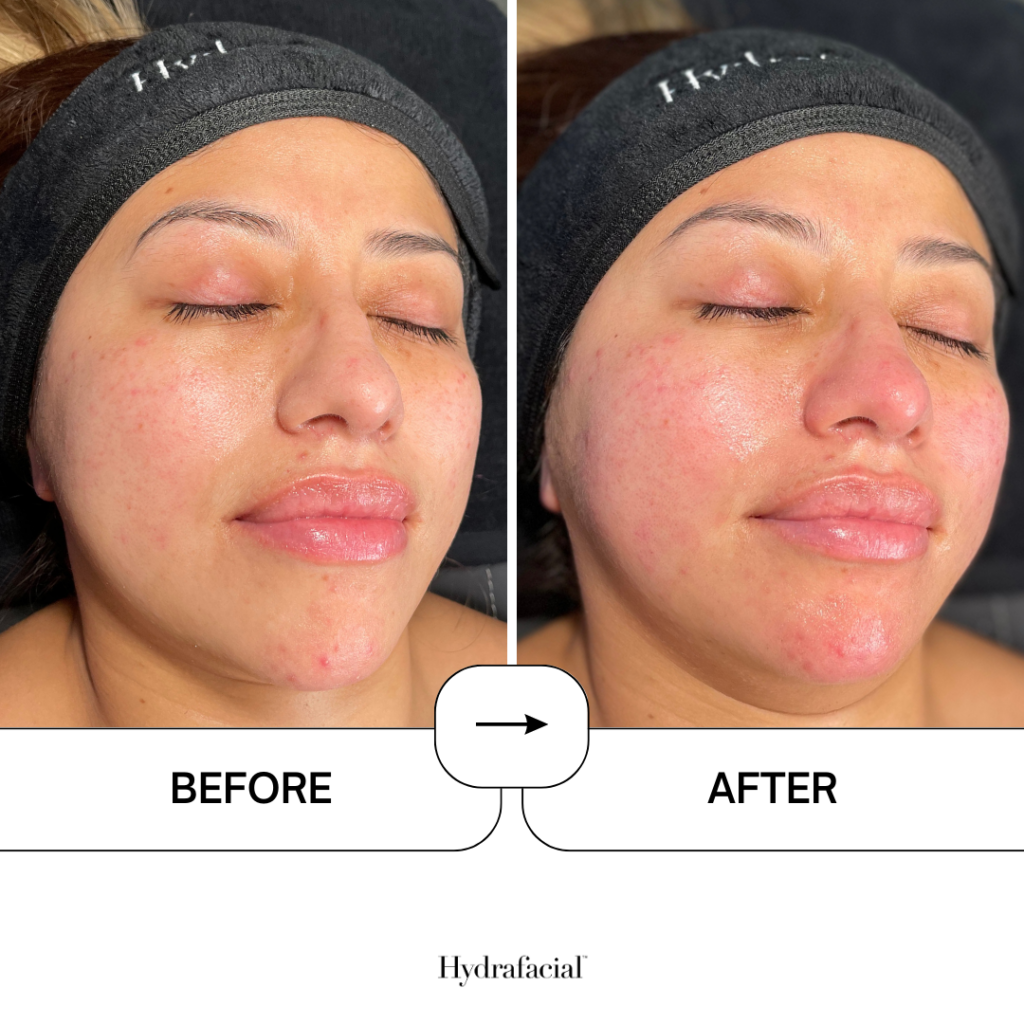
Can Hydrafacial Syndeo™ Help Post-Summer Skin?
For skin that feels congested, lacklustre or simply in need of a refresh, Hydrafacial Syndeo™ can be an ideal treatment for an autumn reset.
After summer, we often see a combination of dead skin cell build-up, SPF, sweat and congestion, alongside dehydration from sun exposure, travel and warmer weather. Hydrafacial works to deeply cleanse and exfoliate the skin, extract impurities and replenish hydration within the same treatment. This can help restore a fresher, smoother and more balanced complexion without the need for more intensive resurfacing.
It can also be a useful starting point within a longer-term treatment plan. By improving hydration, decongesting the skin and supporting overall skin health first, we can create a better foundation before progressing to treatments targeting deeper texture, laxity or collagen loss.
What Can Treat Pigmentation That Looks Worse After Summer?
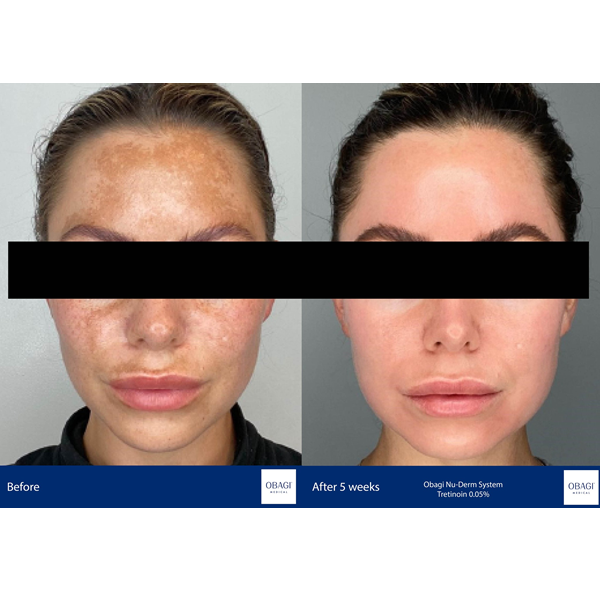
Pigmentation is one of the most common concerns to become more noticeable after summer, although the right approach depends on the type and depth of pigment present.
At Youtopia, one option for appropriate patients is the Obagi Blue Radiance Peel. This chemical peel exfoliates the skin and can help improve superficial pigmentation, uneven tone and texture, making it particularly useful when greater skin clarity is the priority.
However, pigmentation management often extends beyond occasional in-clinic treatments. As an Obagi Medical clinic, Youtopia can create a personalised medical-grade skincare programme to target pigmentation at home and support the results of treatment.
For more established sun damage, uneven tone or stubborn pigmentation following the summer months, we may recommend the Obagi Nu-Derm System. This structured skincare programme is designed to improve the appearance of pigmentation and sun-damaged skin while supporting skin renewal for a brighter, more even complexion. Depending on your skin, the type of pigmentation present and your individual needs, your programme may include prescription-strength options alongside carefully selected Obagi products.
Autumn and winter can be a useful time to focus on correcting some of the visible effects of summer sun exposure, but daily broad-spectrum SPF remains an essential part of the plan. UV exposure continues throughout the year, so consistent protection helps reduce further pigmentation and protect the progress made through both your home skincare and in-clinic treatments.
Is October a Good Time to Start Microneedling?
For many patients, autumn is a practical time to begin a course of Dermapen 4 microneedling, particularly when texture and collagen loss are becoming more noticeable.
Microneedling creates controlled microscopic channels within the skin, triggering the body’s natural repair response and encouraging collagen and elastin production.
At Youtopia, it can be used for concerns including:
- Acne scarring
- Uneven skin texture and tone
- Sun damage and dark spots
- Reduced elasticity
- General skin quality
It is particularly useful when there are more established textural changes or acne scars that require more than surface-level exfoliation or hydration.
Microneedling is generally approached as a course rather than a one-off quick fix. Youtopia recommends three to six treatments spaced approximately four to six weeks apart where appropriate, so starting in October allows collagen remodelling to continue throughout autumn and winter.
When Would Secret RF Be More Appropriate Than Microneedling?
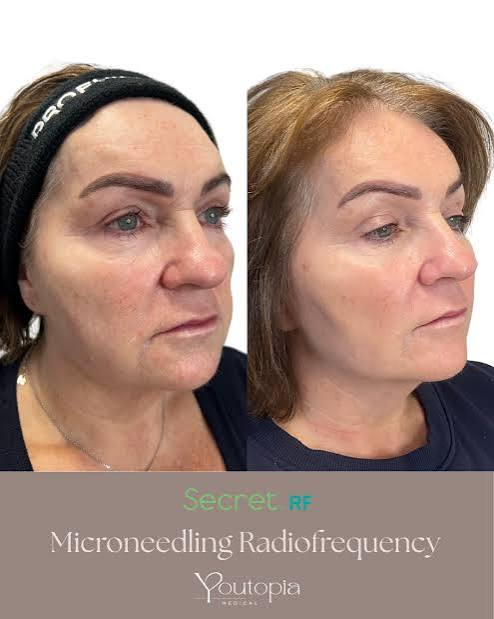
Secret RF by Cutera combines microneedling with fractional radiofrequency energy.
The needles deliver controlled RF energy into deeper layers of the skin, stimulating collagen remodelling while also supporting skin tightening. It can be particularly useful for concerns such as skin laxity, more established texture, enlarged pores and acne scarring.
In practice, Secret RF is not automatically chosen simply because it works at a deeper level. Treatment intensity still needs to match the concern.
For milder textural changes, Dermapen 4 may provide exactly the level of collagen stimulation the skin needs. Where we’re seeing more noticeable laxity, deeper textural changes or a greater degree of collagen loss, we may step things up with Secret RF. Think of it as microneedling on steroids. By combining controlled microneedling with radiofrequency energy delivered into the deeper layers of the skin, Secret RF creates a more intensive collagen-remodelling response, helping to improve firmness, texture and overall skin quality.
What If My Skin Is More Dehydrated Than Damaged?
Dehydration can make fine lines look more noticeable and leave the complexion looking dull or tired, but it does not necessarily mean the skin needs resurfacing.
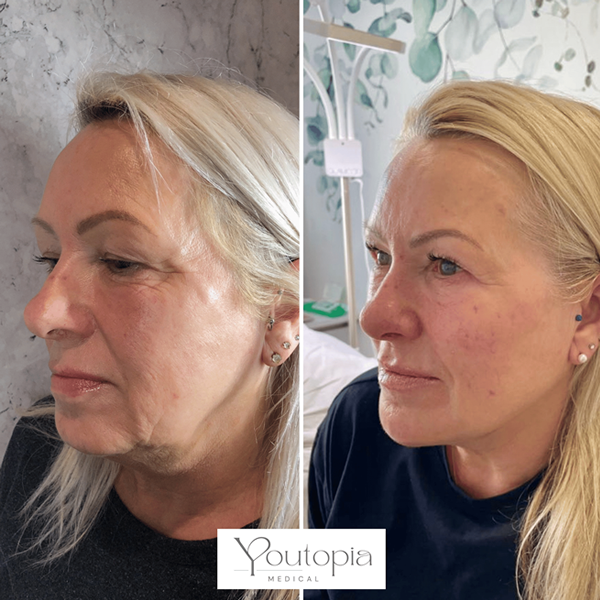
Where hydration, elasticity and declining skin quality are the main concerns, Profhilo may be considered.
Profhilo is an injectable hyaluronic acid treatment, but it is not used in the same way as conventional dermal filler. Rather than adding volume or changing facial contours, it acts as a bioremodelling treatment to improve hydration, skin quality and elasticity while stimulating collagen and elastin.
It can be particularly relevant as skin becomes thinner, drier or less elastic with age. Where the main concern is pigmentation, scarring or pronounced texture, however, a treatment specifically targeting those changes is likely to be more appropriate.
Can You Combine Treatments for a More Complete Autumn Skin Reset?
Yes. Many patients have more than one concern, and combining or sequencing treatments can allow us to address different aspects of the skin without expecting one procedure to do everything.
For example, someone with pigmentation, dehydration and uneven texture may benefit from a staged approach:
- Establish the foundations: An appropriate Obagi medical-grade skincare routine can support daily skin health and target specific concerns between appointments.
- Address superficial pigmentation: An Obagi Blue Radiance Peel may be incorporated where discolouration and skin clarity are priorities.
- Improve texture and collagen: Dermapen 4 or Secret RF may follow where acne scarring, enlarged pores, laxity or deeper textural changes remain.
- Support hydration and elasticity: Profhilo can be considered where skin quality and hydration would benefit from additional support.
Dermalux LED can also be incorporated into treatment programmes at Youtopia where appropriate.
The aim is not to fit as many treatments as possible into autumn. It is to use each treatment for the concern it is designed to address and sequence them sensibly.
Should You Change Your Skincare Routine in October?
Autumn is a good time to review your routine, but that does not mean replacing everything you own.
In fact, introducing several new active ingredients simultaneously can make it difficult to tell what is helping and what may be irritating the skin. Instead, look at whether your existing routine still suits your skin as temperatures change.
Your cleanser should leave the skin comfortable rather than tight. Hydration may need more attention as the weather cools, while targeted ingredients can be introduced where pigmentation, ageing or other concerns require them.
Most importantly, continue using SPF every day. Sun protection is not just a summer habit.
At Youtopia, medical-grade skincare can be used alongside professional treatments to support skin health between appointments and help maintain results over time.
October Skin Reset FAQs
How long before Christmas should I start skin treatments?
It depends on the treatment. Procedures that stimulate collagen are best planned in advance because improvements develop gradually. If you have a particular event in mind, your practitioner can advise when to begin and allow appropriate time between sessions.
Can I have an autumn skin treatment if my skin is sensitive?
Potentially, although the skin should be assessed first. If it is irritated or the skin barrier is compromised, we would usually look at implementing a calming skincare routine to strengthen and support the barrier first. Once the skin is settled and functioning more effectively, we can then consider whether active skincare, peels or collagen-stimulating treatments are appropriate.
Do I need to stop retinol before a facial, peel or microneedling?
Some active skincare products may need to be paused around certain procedures. This depends on the product, its strength and the treatment being performed, so always follow the specific pre-treatment instructions provided by your practitioner.
Can I wear make-up after an October skin treatment?
This varies considerably between treatments. A Hydrafacial has a different recovery profile from Dermapen 4 or Secret RF. You will be given appropriate aftercare explaining when skincare, SPF and make-up can safely be reapplied.
Is October too late to treat sun damage?
No. In fact, autumn is a useful time to assess pigmentation and other changes that have become more noticeable following summer. The appropriate approach will depend on the type of sun damage present and the condition of your skin.
Ready to Reset Your Skin This Autumn?
An October skin reset is not about doing more to your skin. It is about identifying what has changed and choosing the right approach for the months ahead.
At Youtopia Medical, we can assess pigmentation, dehydration, uneven texture, acne scarring, enlarged pores and changes in firmness before recommending the treatments and skincare most appropriate for you.
You can book a consultation at our Cannock clinic, with Youtopia Medical also offering appointments across Stafford, Stoke-on-Trent/Newcastle-under-Lyme, Ashbourne, Cheadle and London.