
By Youtopia Medical – Cannock
There has been a clear shift in what patients are asking for in aesthetics clinics, with far more focus on skin health and quality. At Youtopia Medical in Cannock and across all of our clinic locations, we are seeing patients move away from simply wanting to look more lifted, and instead asking how their skin can behave as it did five or ten years ago.
This is where the “Skin-Tox” movement comes in. It is not about freezing or filling, but about restoring skin function at a cellular level. Treatments such as polynucleotides and regenerative biostimulators like Radiesse are leading this more advanced, medically driven approach to rejuvenation, alongside innovations like the WOW Fusion Micro-Tox Facial, which delivers a bespoke blend of skin-boosting ingredients to improve hydration, texture and overall skin quality.
As we move into late spring, timing becomes just as important as treatment choice. Starting regenerative treatments in May helps the skin build resilience ahead of UV exposure, heat and dehydration, resulting in fewer flare-ups, better hydration and a more even, rested appearance.
In this guide, we will explore how these treatments work, how they differ from traditional approaches, and why they have become a go-to option for pre-summer skin preparation.
What is the “Skin-Tox” trend and why is it everywhere in 2026?
“Skin-Tox” is a patient-led term rather than a medical one, but it reflects a real clinical shift. Instead of temporarily altering appearance, the focus is on improving skin function.
At Youtopia Medical we often see patients who have tried traditional fillers over the years but feel their skin still looks tired, thin or reactive. That is because fillers primarily restore volume. They do not correct underlying cellular ageing.
Regenerative treatments take a different approach. They work by stimulating:
- Collagen production
- Elastin regeneration
- Improved hydration within the dermis
- Repair of damaged or inflamed tissue
The result is skin that looks better because it is functioning better.
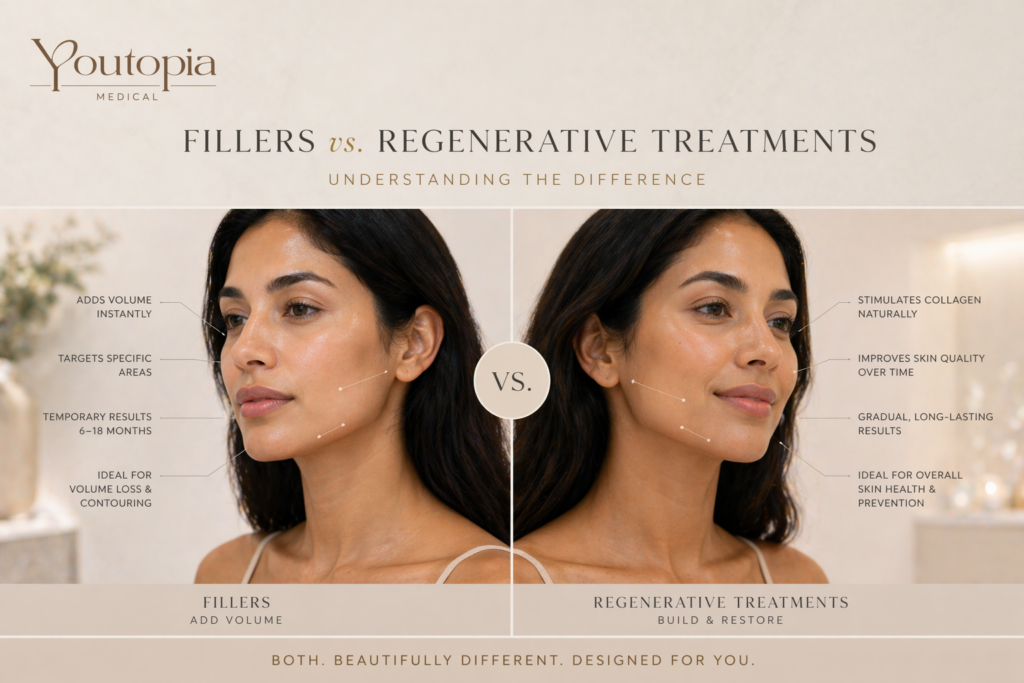
What is the difference between fillers and regenerative treatments?
This is one of the most important distinctions to understand.
Traditional dermal fillers
Dermal fillers are typically hyaluronic acid-based gels placed beneath the skin to restore lost volume or enhance structure.
What they do well:
- Replace volume in cheeks, lips or jawline
- Smooth deeper folds
- Provide immediate visible results
Limitations:
- Do not improve skin quality long term
- Can look heavy if overused
- Do not address inflammation or tissue health
Regenerative treatments
These treatments stimulate your own skin to repair and rebuild itself.
What they do differently:
- Trigger cellular regeneration
- Improve skin thickness and elasticity
- Reduce inflammation
- Strengthen the skin barrier
A common mistake patients make is assuming these treatments are interchangeable. They are not, rather they are often complementary.
For example, we might use traditional dermal fillers for structure, then follow with polynucleotides to improve the overlying skin quality. That combination tends to look far more natural than relying on volume alone.
What are polynucleotides and how do they work?
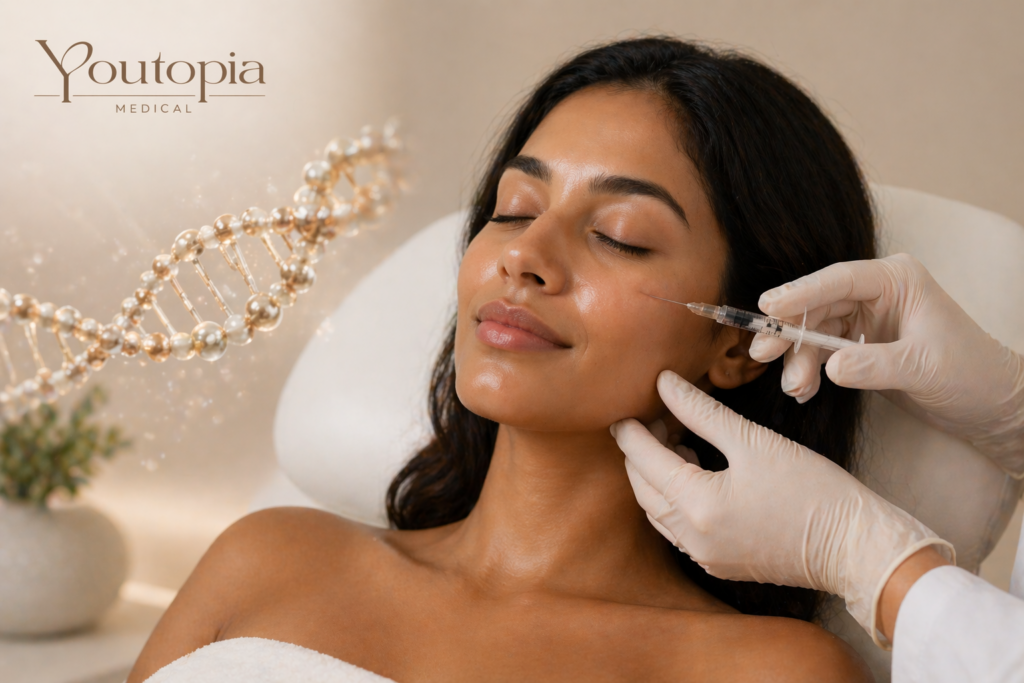
Polynucleotides are one of the most exciting developments in regenerative aesthetics, designed to improve skin quality at a cellular level rather than simply altering appearance. They are highly purified DNA fragments, typically derived from salmon DNA, which is biocompatible with human tissue. Once injected, they act as signalling molecules, stimulating the skin’s natural repair processes, including collagen production and tissue regeneration. They also have a strong hydrating and anti-inflammatory effect, helping to improve skin resilience, reduce sensitivity and support overall skin health over time.
How are they performed?
Treatment involves a series of very fine injections into the skin, typically across areas such as:
- Under the eyes
- Face and cheeks
- Neck
- Décolletage
The procedure is relatively quick, and while you may have some mild swelling or redness afterwards, downtime is minimal.
Who are they suitable for?
Polynucleotides are particularly effective for:
- Tired, crepey or thinning skin
- Dark circles and under-eye hollowing
- Sensitive or rosacea-prone skin
- Early signs of ageing
- Patients who want subtle, natural improvement
For milder cases we would usually start with two to three sessions spaced a few weeks apart. In more advanced skin ageing, we may extend the course.
What are the benefits?
Polynucleotides work on several levels:
- Stimulate fibroblasts to produce collagen
- Improve microcirculation
- Deeply hydrate the skin
- Reduce inflammation
- Strengthen the skin barrier
Following treatment, patients often notice their skin becoming more resilient. It reacts less. It holds moisture better. Makeup sits more evenly, and often less of it is needed. It is important to note that results vary from patient to patient, depending on the extent of skin ageing or damage.
Why are polynucleotides ideal before summer?
Timing is something we pay close attention to for optimal results. Starting treatment in May allows enough time for cellular changes to take effect before peak sun exposure.
Key benefits leading into summer:
- Reduced inflammation
Sun exposure, heat and travel can all trigger skin sensitivity. Polynucleotides help calm inflammatory pathways, which can reduce redness and flare-ups. - Stronger skin barrier
A healthy barrier means better hydration retention and less irritation from environmental stress. - Improved under-eye appearance
Dark circles often worsen with dehydration and fatigue. Polynucleotides improve circulation and skin thickness in this area, giving a fresher look without needing concealer. - That “no-makeup makeup” finish
Patients often describe their skin as looking smoother and more even, rather than obviously treated.
What is Radiesse and how does it fit into regenerative treatments?
Radiesse is another key treatment in the regenerative category, but it works slightly differently to polynucleotides.
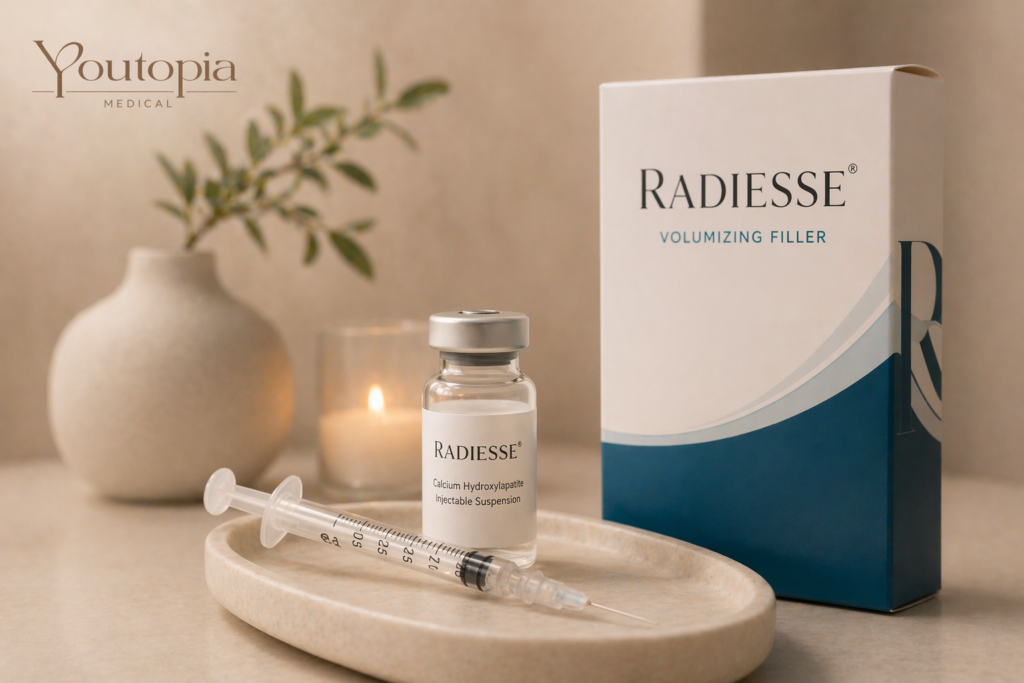
What is Radiesse?
Radiesse is a calcium hydroxylapatite-based injectable that acts as a biostimulator. It works by encouraging your body to produce its own collagen rather than simply adding volume. It is made up of microscopic calcium-based particles suspended in a gel, which are gradually absorbed while stimulating tissue regeneration.
It can provide a subtle lifting or firming effect, but its main benefit develops over time as new collagen forms within the skin. This makes it particularly effective for improving skin density, firmness and overall structure in a natural, long-lasting way.
What are the benefits?
- Stimulates collagen production over time
- Improves skin density and firmness
- Provides subtle lift without adding bulk
- Long-lasting results
In more stubborn cases, particularly where there is visible laxity, Radiesse tends to give a stronger structural response than polynucleotides alone.
What is a Skin-Tox Treatment and how does it work?
The rise of “Skin-Tox” reflects a clear shift towards softer, more refined aesthetic outcomes, where the focus is on skin quality rather than obvious change. One of the most effective ways we deliver this in clinic is through the WOW Fusion Micro-Tox Facial, a treatment designed to improve how the skin looks and behaves on a day-to-day basis.
Skin tox works by delivering micro-doses of neurotoxin very superficially into the skin, rather than into the muscle. This allows it to subtly reduce pore size, regulate oil production and smooth overall texture, creating a more refined, luminous finish. Patients often describe the result as a real-life “filter effect”, where the skin looks clearer, fresher and more even without appearing treated.
What makes this approach particularly effective is how well it integrates with regenerative treatments. Skin tox focuses on the surface, refining texture and improving clarity, while treatments such as polynucleotides work deeper within the skin to support repair, hydration and cellular function. Radiesse, in turn, stimulates collagen and elastin production, helping to restore firmness and structure over time.
In practice, we often combine these treatments depending on the patient’s skin condition. Skin tox can be used to enhance overall finish and oil balance, while regenerative treatments address the underlying quality of the skin. This layered approach tends to deliver more consistent, natural-looking results, with improvements that continue to develop rather than appearing all at once.
Are regenerative treatments suitable for all ages?
Regenerative treatments are not defined by age alone, and suitability is far more dependent on the condition of the skin, including skin thickness, hydration, inflammation and early structural changes.
Younger patients may benefit from polynucleotides as a preventative approach, particularly for dehydration or under-eye concerns, while those in their 30s to 50s often see the best results from a combination of regenerative treatments that address both skin quality and early laxity. In more mature skin, a layered approach is usually needed, incorporating treatments such as Radiesse alongside polynucleotides to improve firmness and support deeper structural changes.
How do you choose the right regenerative treatment?
This is where clinical experience really matters.
At Youtopia Medical, we assess:
- Skin thickness
- Level of inflammation
- Degree of laxity
- Hydration levels
- Lifestyle factors such as sun exposure and stress
For example:
- If the skin is thin, reactive and dehydrated, polynucleotides are usually the starting point
- If there is visible sagging or loss of firmness, Radiesse becomes more relevant
- If both are present, a combined approach is often best
A common mistake patients make is choosing treatments based on trends rather than their individual skin needs.
Frequently Asked Questions
How long do polynucleotide results last?
Results typically last several months, with maintenance treatments recommended every 6 to 9 months depending on your skin and lifestyle.
Are polynucleotides better than filler?
They are not better or worse, just different. Polynucleotides improve skin quality, while fillers restore volume. Many patients benefit from both when used appropriately.
Is there downtime after treatment?
Most patients experience mild redness or swelling for 24 to 48 hours. This usually settles quickly.
When should I start treatment before a holiday?
Ideally 6 to 8 weeks before travel. This allows time for a course of treatments and visible improvement.
Can polynucleotides help dark circles?
Yes. They improve skin thickness and circulation under the eyes, which can reduce the appearance of dark circles over time.
What is skin tox and how is it different from traditional anti-wrinkle treatments?
Skin tox uses micro-doses of neurotoxin placed very superficially within the skin to improve texture, reduce pore size and create a smoother, more radiant finish. Unlike traditional anti-wrinkle treatments, which are designed to relax targeted muscles and soften lines caused by movement, skin tox works at the level of the skin itself. The result is a more refined, even complexion while maintaining natural facial expression and movement.
Is Radiesse a filler?
Radiesse sits in a unique category. It can be used as a dermal filler, but its primary role is as a biostimulator. When placed more deeply, it can restore structure and create definition, particularly along the jawline, where it enhances contour and provides support.
At the same time, its key benefit lies in its ability to stimulate your body’s natural collagen and elastin production. This means that beyond any initial lifting effect, the skin continues to improve in firmness, strength and overall quality over time. In practice, it offers both an immediate structural result and a longer-term regenerative effect, making it a versatile option within a more comprehensive treatment plan.
Considering regenerative treatments this summer?
Starting treatments such as polynucleotides and Radiesse in late spring allows your skin to enter summer stronger, calmer and more resilient. The result is not an obvious change, but a noticeable one. Skin that feels healthier, looks more even and requires less effort day to day.
If you are unsure where to start, book a consultation at Youtopia Medical so we can assess your skin properly and build a treatment plan that suits you. With clinics across multiple locations, you can explore what regenerative treatments might look like for your skin, with a personalised and medically led approach.